
The short answer
When a noise happens matters more than what it sounds like. Noises under braking come from the brakes, noises over bumps come from the suspension, noises that follow road speed come from the wheels and tires, and noises that follow engine speed come from the engine.
Noises when you brake
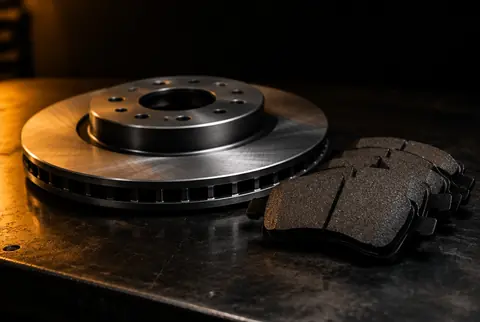
A high squeal is usually the wear indicator, a small metal tab built into the brake pad so that you hear it before the pad runs out. Book a brake inspection soon.
A grinding or growling sound means the pad material is gone. Metal is now cutting into the rotor, the stopping distance is longer and the repair gets more expensive every day you drive it.
Noises over bumps
A clunk or knock over bumps and driveways comes from a worn joint in the suspension. Sway bar links are the most common and the least serious. Ball joints and tie rod ends make similar noises and are safety parts, so a clunk is worth having checked on a hoist.
Noises that change with road speed
A hum or drone that gets louder the faster you go, and changes when you steer gently left or right on the highway, is usually a wheel bearing. Tires with uneven wear make a similar sound.
A rhythmic thump that speeds up with the car points to a tire: a flat spot, a bulge or something stuck in the tread.
Noises when you turn
A fast clicking while turning sharply, most often when pulling away from a stop, is the classic sign of a worn CV joint on a front-wheel-drive or all-wheel-drive car. A whine while turning the wheel points to the power steering.
Noises from the engine
A squeal on start-up that fades after a few seconds is usually a drive belt. A steady ticking can be normal injector noise, but check the oil level first, because low oil makes the top of an engine tick. A deep knock that gets worse under load is serious. Stop driving and call.
How to describe a noise to a mechanic
The more precisely you can describe it, the less time it takes to find. Before you call, note:
- When it happens: braking, turning, over bumps, accelerating or sitting still.
- At what speed, and whether it changes with road speed or with engine speed.
- Whether it is there when the engine is cold, warm or both.
- Where it seems to come from: front or back, left or right.
- Record it on your phone if you can. A ten second clip is worth a paragraph.
Want us to look at it?
Call or text GTS Auto Repair and tell us what the car is doing. We are at 133 Manville Rd, Unit 32, Scarborough, ON M1L 4J7.